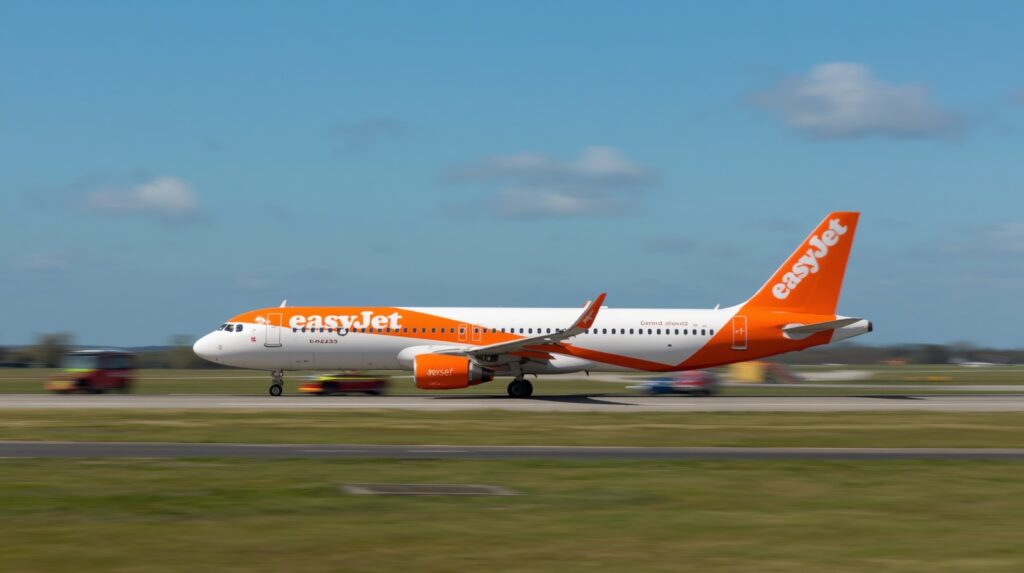

Commercial aviation is built around preparation, redundancy, and careful decision-making. While emergency landings naturally attract attention, they are not always signs of catastrophic mechanical failure. In many cases, they reflect pilots and airlines following established safety procedures to deal with unexpected situations.
The EasyJet flight U2238 emergency landing Newcastle incident is one example that prompted questions from travelers and aviation observers alike. Passengers wanted to know why the aircraft diverted, whether anyone was injured, and what happens after an emergency landing is declared.
Although not every operational detail has been made public, the available information provides a clear picture of why the flight was diverted and how the situation unfolded.
What happened during the EasyJet flight U2238 emergency landing Newcastle?
EasyJet flight U2238 (also shown as EZY2238) was operating a scheduled service from Copenhagen Airport in Denmark to Manchester Airport in the United Kingdom.
During the journey, the flight crew declared an emergency and diverted the aircraft to Newcastle International Airport rather than continuing to Manchester. Flight-tracking services recorded the diversion, while EasyJet later informed passengers that the diversion was linked to a passenger welfare issue, meaning a medical emergency on board rather than a confirmed technical fault with the aircraft. The aircraft landed safely in Newcastle.
The flight eventually continued to Manchester after the situation had been addressed.
Importantly, no reports indicated injuries resulting from the diversion itself.
Key facts at a glance
| Detail | Information |
|---|---|
| Flight | EasyJet U2238 (EZY2238) |
| Route | Copenhagen to Manchester |
| Diversion Airport | Newcastle International Airport |
| Reason reported by EasyJet | Passenger welfare issue (medical emergency) |
| Aircraft outcome | Landed safely |
| Passenger injuries | None reported from the landing |
Why would an aircraft declare an emergency?
For many travelers, hearing that an aircraft has “declared an emergency” sounds alarming.
In aviation, however, the phrase has a specific operational meaning.
Pilots may declare an emergency whenever they believe they require priority handling from air traffic control. This allows controllers to clear the quickest and safest route for landing.
Emergency declarations can happen because of:
- Medical emergencies involving passengers
- Smoke warnings
- Engine or system indications
- Cabin pressure issues
- Severe weather
- Fuel concerns
- Other situations where immediate assistance is appropriate
Not every emergency declaration signals that the aircraft itself is in danger.
Medical situations are among the most common reasons commercial flights divert unexpectedly.
Why Newcastle instead of Manchester?
A question many people asked after the incident was why the aircraft landed in Newcastle instead of continuing to Manchester.
The answer usually depends on several operational considerations rather than a single factor.
Pilots and airline operations teams evaluate:
- Distance to the nearest suitable airport
- Weather conditions
- Available emergency medical services
- Runway length
- Air traffic conditions
- Fuel planning
- Time needed to get medical treatment for the affected passenger
If another airport allows significantly faster medical assistance, diverting becomes the safest option.
In cases involving serious illness, minutes can matter more than completing the scheduled route.
EasyJet’s explanation
Following the diversion, EasyJet informed passengers that the aircraft had been diverted because of a passenger welfare issue.
The airline also described the event as an extraordinary circumstance, meaning the disruption was outside the airline’s normal operational control.
While EasyJet did not release detailed medical information—which is standard practice because of passenger privacy—it confirmed the diversion was made for safety reasons.
Protecting the privacy of passengers involved in medical emergencies is standard across the airline industry, so airlines rarely disclose further details.
How flight crews handle medical emergencies
Every commercial flight carries equipment designed for onboard medical situations.
Cabin crews receive regular training that includes:
- Basic first aid
- CPR
- Use of automated external defibrillators (AEDs)
- Oxygen administration
- Communication with emergency services
Many airlines also have access to medical advisory services on the ground. Pilots can communicate with doctors who help determine whether continuing the flight is appropriate or whether diversion is necessary.
If the medical advice indicates that immediate hospital treatment is needed, the crew will usually divert to the nearest suitable airport.
This process prioritizes patient safety while maintaining safe aircraft operations.
What happens after an emergency landing?
An emergency landing does not necessarily mean passengers immediately leave the aircraft using evacuation slides.
In fact, most emergency landings end much more routinely.
After landing, the aircraft may:
- Taxi normally to a stand.
- Be met by emergency vehicles as a precaution.
- Allow medical personnel to board.
- Transfer the affected passenger for treatment.
- Undergo operational checks if required.
- Continue the journey once cleared.
That appears to be consistent with the reported handling of the U2238 incident, where the aircraft later resumed its trip after the diversion.
How common are diversions for medical emergencies?
Although they receive considerable media attention, medical diversions remain relatively uncommon when compared with the enormous number of flights operating every day.
When they do occur, they often involve situations such as:
- Heart-related symptoms
- Difficulty breathing
- Severe allergic reactions
- Loss of consciousness
- Stroke symptoms
- Serious injuries
- Pregnancy-related complications
Airlines balance two priorities:
- Providing urgent medical care.
- Maintaining the highest level of flight safety.
Modern aircraft are capable of continuing safely even while crews manage emergencies inside the cabin.
Did the emergency affect other flights?
According to reports, the emergency declaration resulted in temporary air traffic adjustments around Newcastle.
One aircraft reportedly entered a holding pattern while priority was given to the EasyJet flight during its arrival.
This is standard aviation practice.
When an aircraft declares an emergency, air traffic controllers provide priority handling to reduce delays in landing.
These procedures are designed to maximize safety for everyone using the airport.
Passenger reactions
Passengers on diverted flights often experience uncertainty more than anything else.
Many travelers understand that diversions can disrupt onward transport, connections, and schedules. However, most also recognize that decisions involving passenger health are made with safety as the primary concern.
In situations like this, airlines generally work to:
- Keep passengers informed.
- Arrange onward travel where possible.
- Provide updates regarding departure times.
- Coordinate with airport staff.
While delays can be frustrating, diversions caused by medical emergencies are generally viewed as unavoidable operational events.
Emergency landings are part of modern aviation safety
One misconception is that an emergency landing always indicates something has gone seriously wrong with the aircraft.
In reality, declaring an emergency is often evidence that aviation safety systems are functioning exactly as intended.
Pilots are trained to make conservative decisions.
Rather than taking unnecessary risks, they choose the option that offers the safest outcome for everyone onboard.
Commercial aviation has developed these procedures through decades of operational experience, making emergency responses highly structured rather than improvised.
Why this incident attracted attention
Several factors contributed to increased public interest in the diversion.
Flight-tracking websites quickly showed the aircraft changing course, and aviation monitoring accounts reported that the crew had declared an emergency. Social media users then began sharing updates before official airline information became available.
This sequence has become increasingly common.
Today, many aviation events become widely discussed online within minutes, even before airlines publish statements.
As a result, early speculation sometimes circulates before verified information emerges.
In the case of the U2238 diversion, EasyJet later clarified that the diversion related to a passenger welfare issue, helping explain why the aircraft landed at Newcastle instead of completing its scheduled arrival into Manchester.
Conclusion
The EasyJet flight U2238 emergency landing Newcastle incident illustrates how commercial aviation prioritizes safety above schedules. Available information indicates that the diversion was prompted by a passenger medical emergency rather than a confirmed aircraft malfunction. The crew declared an emergency, diverted to Newcastle, landed safely, and enabled medical assistance before the flight later continued toward Manchester.
While headlines describing an emergency landing can sound dramatic, such decisions are often precautionary and reflect well-established aviation procedures. In this case, the outcome reinforces an important point: when passenger welfare is at stake, crews are trained to act quickly, decisively, and with safety as their overriding priority.
Frequently Asked Questions
Why did EasyJet flight U2238 divert to Newcastle?
EasyJet stated that the diversion was caused by a passenger welfare issue, indicating a medical emergency onboard rather than a confirmed technical problem.
Was anyone injured during the landing?
No injuries related to the emergency landing itself were reported.
Did the aircraft experience a mechanical failure?
Based on publicly available information, EasyJet identified the reason as a passenger welfare issue. No confirmed aircraft mechanical fault has been announced.
What happens when a pilot declares an emergency?
Air traffic control gives the aircraft priority handling, allowing it to land as quickly and safely as possible while emergency services prepare if required.
Did the flight eventually reach Manchester?
Yes. After landing safely in Newcastle and addressing the situation, the aircraft later continued its journey to Manchester.