
Interior design trends are moving away from homes that look perfectly staged but feel impersonal. The strongest ideas now favour warmth, character and practicality. Rooms are becoming more expressive, yet they are also expected to support the realities of everyday life: working, resting, entertaining, storing possessions and adapting as households change.
This does not mean minimalism has disappeared or that every room must be filled with colour. Instead, the focus has shifted from visual perfection to atmosphere. Natural wood, deep earth tones, vintage furniture, tactile surfaces and carefully chosen decorative details are giving homes a more settled, individual appearance.
The most useful way to approach these trends is not to copy an entire fashionable look. It is to identify the elements that suit the architecture, budget and people living in the space.
The Shift Behind Current Interior Design Trends
For several years, pale neutral rooms, simple furniture and open-plan layouts dominated home design. These ideas offered calm and flexibility, but repeated too literally, they could also produce spaces that felt cold or interchangeable.
The newer direction keeps some of that simplicity while introducing more depth. Recent design forecasts have highlighted lived-in interiors, natural wood kitchens, darker timber, earth colours, decorative textiles and handcrafted surfaces. The common thread is a desire for rooms that feel accumulated over time rather than purchased as complete matching sets. Vogue’s 2026 interiors forecast reflects this broader movement toward comfort, craftsmanship and personality.
A successful room may now combine a contemporary sofa with an old wooden side table, a striped cushion, a sculptural lamp and artwork collected from different places. The pieces do not need to belong to one strict style. They need to relate through colour, scale or mood.
Warm Neutrals Are Replacing Cool Grey
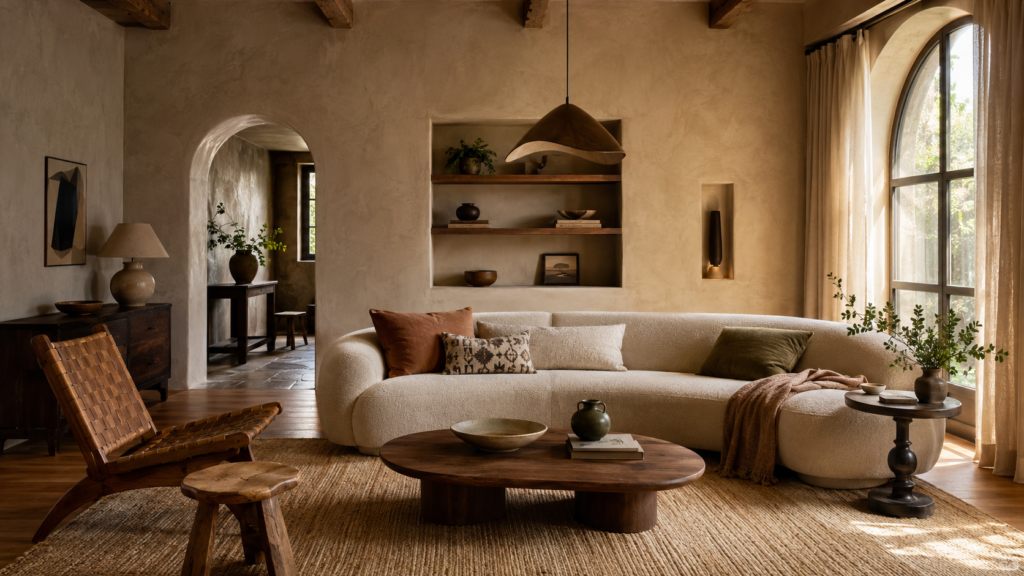
Neutral interiors remain popular, but the temperature has changed. Stark white and blue-based grey are giving way to khaki, mushroom, sand, oatmeal, caramel and clay. These shades create a softer background and tend to work naturally with timber, stone, aged metal and woven fabrics.
Paint forecasts underline this warmer direction. Sherwin-Williams selected Universal Khaki, a warm mid-tone neutral, as its 2026 colour of the year. Benjamin Moore chose Silhouette, a dark combination of espresso brown and charcoal. Together, the choices show that neutral decorating now extends from light earthy shades to rich, dramatic browns. Sherwin-Williams and Benjamin Moore both position these colours as grounded alternatives to cooler palettes.
Chocolate brown, burgundy, muted blue, olive green and terracotta are also appearing more often. They can be introduced through paint, upholstery or smaller accents. In a compact room, painting the walls, trim and doors in related tones can reduce visual interruptions and make the space feel more intentional.
The important consideration is light. A deep brown that feels intimate in a sunny sitting room may look heavy in a poorly lit hallway. Testing a large paint sample at different times of day is more reliable than choosing from a small colour card.
Wood Returns With Its Grain on Display
Wood is no longer being treated merely as a quiet background material. Visible grain, knots and tonal variation are becoming important parts of the design.
In kitchens, natural wood cabinetry is competing strongly with painted white finishes. Houzz reports that 29 percent of surveyed renovating homeowners chose wood cabinets, slightly ahead of white at 28 percent. Medium wood tones were the most common choice among the wood options. The 2026 U.S. Houzz Kitchen Trends Study suggests that warmth and natural character are influencing real renovation decisions, not only showroom displays.
Walnut, oak, cherry and reclaimed timber can add depth without requiring elaborate decoration. Mixing woods is also becoming more acceptable. A pale oak floor can sit comfortably beside a darker walnut table when another element—perhaps a rug or wall colour—helps connect them.
The aim is not to cover every surface in timber. Too much of the same wood can make a room feel flat or overly themed. Contrast usually creates a better result: dark cabinetry with light stone, an old table against plastered walls, or warm wood beside brushed stainless steel.
Rooms Are Becoming More Collected and Personal
Matching furniture suites are losing relevance. A room containing pieces from different periods usually feels more natural, particularly when some objects have a personal history.
Vintage furniture supports this collected look because it brings patina, unusual proportions and construction details that are difficult to reproduce in mass-market pieces. It may also be a practical way to find solid wood furniture at a reasonable price, although condition, repairs and delivery costs should be checked carefully.
One antique cabinet can provide more character than several small decorative accessories. Likewise, a handmade ceramic lamp, framed textile or inherited chair can act as a focal point without forcing the rest of the room into a traditional style.
Personalisation does not require clutter. Editing remains important. The difference is that objects are chosen because they carry meaning, serve a purpose or create a distinctive visual moment—not simply because an empty surface needs filling.
Texture Is Doing More of the Decorative Work
As colour palettes become earthier, texture prevents rooms from looking dull. Linen curtains, wool rugs, limewash-style walls, timber joinery, handmade tiles and natural stone all respond differently to light. Their variation gives a space movement even when the colours are restrained.
Textile wall hangings are also returning as an alternative to framed prints. They soften acoustics, add warmth and can fill a large wall without the hardness of glass or metal. Decorative details such as fringe, piping and pleated lampshades are appearing again, often in controlled amounts.
This layered approach works best when textures have different visual weights. A heavily patterned rug, rough wall finish, bouclé sofa and several woven baskets may compete with one another. A calmer combination might pair smooth painted walls with linen upholstery, a timber table and one strongly textured rug.
Texture should also suit the room. Delicate fabrics may be unsuitable for dining chairs used by young children, while deeply grooved surfaces can be inconvenient in areas that require frequent cleaning.
Kitchens Feel More Like Furnished Rooms
The highly uniform kitchen is becoming softer and less clinical. Designers are using furniture-style islands, glass-front cabinets, freestanding cupboards and varied cabinet heights to create a room that appears to have evolved gradually.
Natural wood doors, painted sections and stone can now appear together rather than being repeated in a single finish. Range alcoves provide an architectural focal point, while concealed appliances reduce visual noise. Open shelves remain useful for frequently used items, but fully open storage is being balanced with closed cabinetry to make daily maintenance easier.
Metal finishes are loosening up as well. Brass does not have to be repeated on every handle, tap and light fitting. Brushed nickel, stainless steel, bronze and aged brass can coexist when their placement looks deliberate.
Function should still lead. A beautiful freestanding cabinet is not an improvement if it blocks circulation or provides less useful storage than the cabinetry it replaces. The most convincing kitchens combine a relaxed appearance with carefully planned work zones.
Curves Become Quieter and More Architectural
Rounded furniture continues to appeal because it softens straight walls and rectangular floor plans. The look is becoming more refined, however. Rather than filling a room with exaggerated “blob” shapes, designers are using curves selectively.
A round dining table can improve movement in a small space. A curved sofa may define a conversation area in an open room. Arched doorways, rounded island corners, scalloped edges and upholstered banquettes introduce softness at an architectural level.
Scale matters. Curved furniture often occupies more floor area than its measurements suggest, so it should be mapped out before purchase. Marking the outline with painter’s tape is a simple way to check whether walking routes will remain comfortable.
Lighting Is Layered Instead of Centralised
A single ceiling light rarely provides enough flexibility. Contemporary rooms increasingly rely on several sources placed at different heights: ceiling fittings for general illumination, wall lights for atmosphere, floor lamps for dark corners and table lamps for close, warm light.
Sculptural lighting is also serving as decoration. A pendant above a dining table or an oversized paper shade can anchor a room even when the surrounding furnishings are simple.
The colour temperature of the bulbs should be considered alongside the fittings. Warm light generally supports timber and earth-toned interiors, while brighter task lighting is useful over kitchen counters and desks. Dimmers allow one room to shift between practical and relaxed use without adding more furniture or decoration.
Pattern Returns in Focused Bursts
Pattern is reappearing through striped upholstery, expressive tiles, botanical fabrics, murals and decorative borders. The current approach is less concerned with following one historic style and more interested in creating memorable moments.
A patterned tile floor in a small entrance can establish character immediately. Wallpaper inside a cabinet adds surprise without dominating the room. A striped chair can energise a neutral sitting area more effectively than numerous unrelated accessories.
Repeating one or two colours from the pattern elsewhere helps the room feel connected. Pattern becomes difficult when every surface demands attention, so quieter areas are necessary to give the eye somewhere to rest.
Nature-Inspired Design Becomes More Practical
Bringing nature indoors now involves more than placing plants around a room. Daylight, outdoor views, ventilation and honest materials all contribute to a stronger connection with the natural environment.
Furniture arrangements that keep windows unobstructed can make a bigger difference than adding decorative greenery. Stone, clay, timber, wool and linen introduce natural variation, while earthy colours reinforce the effect.
Houseplants remain valuable, but they should match the available conditions. A struggling plant in a dark corner does not create a calming atmosphere. In low-light rooms, botanical artwork, natural materials or views toward an outdoor planted area may be more successful.
Choosing Interior Design Trends That Will Last
The best interiors are rarely built around a single season’s fashionable objects. They combine durable foundations with details that can change.
Expensive or difficult-to-replace elements—flooring, fitted cabinetry, bathroom fixtures and large furniture—benefit from practical materials and proportions. Paint, lamps, cushions, artwork and smaller tables offer safer opportunities to experiment with colour or pattern.
Before adopting a trend, consider whether it suits the room’s architecture and daily use. A dark, enveloping colour scheme may transform a snug or bedroom but feel restrictive in a busy family kitchen. Open shelving can look beautiful in photographs while creating extra cleaning in real life.
The most enduring interior design trends are not really about copying a particular appearance. They reflect broader priorities: comfort, craftsmanship, flexibility and personal expression. A home feels current when it supports the people living there and shows something of their character—not when every item was purchased at the same moment.
Frequently Asked Questions
What colours are currently popular in interior design?
Warm neutrals, chocolate brown, khaki, terracotta, burgundy, muted blue and natural green are prominent. The right choice depends on the room’s daylight and existing materials.
Is grey interior design outdated?
Grey is not automatically outdated, but cool grey used everywhere can feel impersonal. Warmer greys work well when combined with wood, textured fabrics and richer accent colours.
Are open-plan homes going out of style?
Open plans remain useful, but many households want better-defined zones. Rugs, shelving, screens, lighting and furniture placement can create separation without building permanent walls.
How can I update a room on a small budget?
Paint, rearranged furniture, improved lighting and a few well-chosen textiles can make a substantial difference. Vintage side tables, mirrors and artwork can also add character affordably.
Should every room follow the same design style?
No. Rooms can have different moods while still feeling connected through repeated colours, materials or architectural details. Consistency is helpful, but exact matching is unnecessary.