
When the fourteenth series of Death in Paradise ended, viewers saw a memorial message dedicated to Denis Guyenon. He was not an actor or an on-screen character, so the tribute naturally prompted questions about who he was and why he meant so much to the production.
Guyenon was a professional photographer based in Guadeloupe, the French Caribbean archipelago where the BBC crime drama is filmed. He spent years creating the production stills that introduced its characters, locations and stories to the public. Yet television represented only one part of a varied career that also included advertising, magazine work, music, environmental projects and images of Caribbean life.
| Detail | Available information |
|---|---|
| Profession | Independent photographer and television stills photographer |
| Born | 24 June 1965 |
| Died | 6 July 2024, aged 59 |
| Based in | Guadeloupe |
| Best known for | Death in Paradise |
| Other credited productions | Capitaine Marleau and reportedly Platane 2 |
| Main photographic fields | Television, advertising, products, artists and nature |
Who Was Denis Guyenon?
Public biographical information about Guyenon is limited. This is unsurprising because he worked behind the camera and did not cultivate the kind of public profile associated with actors or television presenters. Details about his birthplace, formal education and private family life have not been reliably documented in widely available sources.
A photography profile published in 2006 offers one of the clearest accounts of his early professional development. According to that account, he began learning how to shape and control light in Munich, Germany, in 1984. It names photographers Christof Piepenstock and Issad Ciccic as important figures in that period of his training.
The same profile says that he began travelling in 1990 and reached Guadeloupe after visiting Brazil. A later local obituary described him as having lived in Guadeloupe for 27 years. Those accounts do not produce an identical arrival date, so it is safest to say that he established a long-term life and career on the islands during the 1990s rather than claim a more precise date.
What is clear is that Guadeloupe became central to his identity as a photographer. He did not simply arrive when an international production required a local crew member. He had already spent years photographing the islands, working with regional organisations and developing relationships throughout the local creative community.
A Guadeloupe Career Built Around Light
Long before the television tribute brought his name to a wider audience, Guyenon was known within Guadeloupe’s professional photography world. He worked independently for communication agencies operating on the archipelago and neighbouring Caribbean islands.
His commercial portfolio included carefully arranged photographs of jewellery, handbags and other products. This branch of photography can look straightforward to an outsider, but it requires exact control of reflections, shadows, colour and texture. A polished metal surface may reflect the camera or studio equipment, while a gemstone can appear dull if the lighting is slightly misplaced. Every object has to be arranged with purpose.
He contributed to publications including Joho, TV Mag and Le Mag. He also photographed events at the Destreland shopping centre and worked alongside communications professional Valérie Parratte. A local remembrance emphasised the patience and sense of composition he brought to these assignments. It also recalled his belief that light gives objects their brightness, shadows and physical depth.
That concern with storytelling extended beyond product photography. One of his publicly archived galleries was titled Regard de Guadeloupe, meaning “A View of Guadeloupe.” It included colour images of the archipelago and nearby islands, covering people, musicians, wildlife and natural scenery. The subjects suggest a photographer interested not only in attractive landscapes but also in the character of the place where he lived.
His clients and collaborators crossed several fields. He worked with Crazy Sound Studio and artists such as Guadeloupean singer Tanya Saint-Val. He was also associated with Évasion Tropicale, an organisation involved in studying and protecting sea turtles and marine mammals. This kind of work demands a different approach from studio advertising: the photographer has less control over the environment and must respond to movement, weather and unpredictable animal behaviour.
Together, these assignments show considerable range. He could arrange small objects under controlled lighting, photograph performers, cover public events and document Caribbean nature. That versatility later proved particularly valuable on film and television sets.
What a Television Stills Photographer Actually Does
A stills photographer occupies an unusual position on a production. The programme’s main cameras record moving scenes, but those recordings are not always suitable for posters, press releases, listings pages or newspaper features. Broadcasters therefore need high-resolution photographs created specifically for publicity and distribution.
The photographer may capture cast portraits, significant moments from an episode and carefully composed images that communicate a character or storyline without revealing too much. The work must often be completed while filming is already under pressure.
Remaining unobtrusive is essential. A photographer needs to find an effective angle without entering the main camera’s frame, distracting an actor or slowing the schedule. Television stills must also match the atmosphere of the programme. An image from a light Caribbean mystery should not resemble a dark urban thriller unless the particular scene calls for that mood.
Viewers may never see the photographer’s name during an episode, but they encounter the work elsewhere. A cast photograph in a television guide, an image accompanying an interview or a picture announcing a new detective may all come from the unit stills photographer. This explains why the production team considered Guyenon’s contribution so important.
The Denis Guyenon Death in Paradise Connection
Death in Paradise began in 2011 and uses Guadeloupe as the real setting for the fictional Caribbean island of Saint Marie. Its bright coastal views, colourful buildings and tropical vegetation are fundamental to its identity. A locally based photographer who understood Caribbean light and the practical realities of working on the islands was therefore a natural fit.
There is some inconsistency over exactly when his involvement began. Screen-credit databases commonly list him as the stills photographer from 2017 to 2024, covering approximately 60 episodes between Series 6 and Series 13. However, photographs credited to him and Red Planet Pictures were being published by at least 2015. After his death, executive producer Tim Key said that he had worked on the programme from the beginning, while picture publicist Alex Gill described a 13-year working relationship with him.
The most reasonable conclusion is that public credit databases do not capture his complete history with the series. Behind-the-scenes records are sometimes incomplete, particularly when a crew member’s photographs are used for publicity rather than appearing within the programme itself.
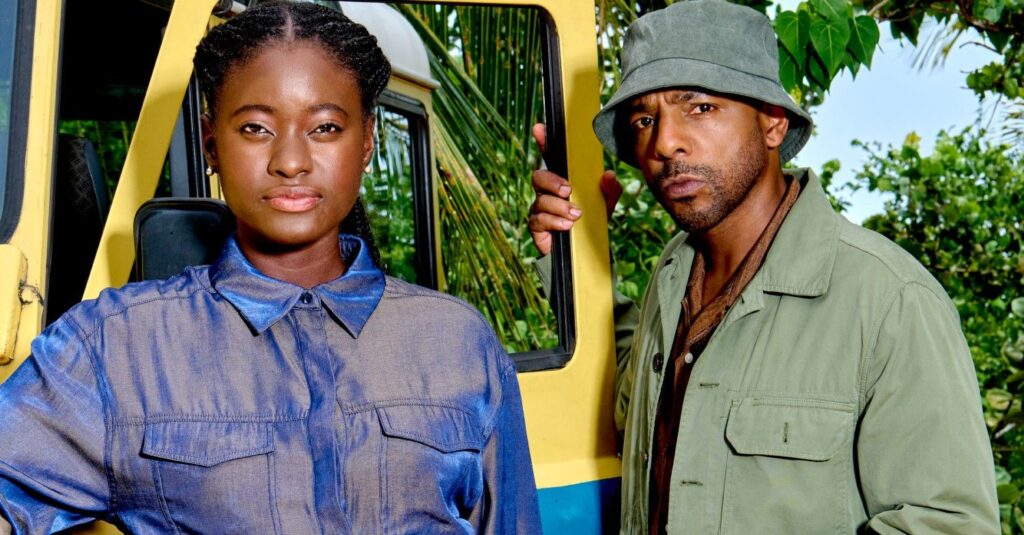
During his documented years, he photographed several of the show’s leading detectives. These included Kris Marshall as DI Humphrey Goodman, Ardal O’Hanlon as DI Jack Mooney and Ralf Little as DI Neville Parker. His photographs continued to circulate internationally through broadcaster publicity, entertainment reporting and cast interviews.
An official Red Planet Pictures announcement for Series 9, published in 2019, used one of his images. Photo archives also credit him on material from later seasons, including pictures of Joséphine Jobert, Don Warrington, Shantol Jackson and other regular or guest cast members. These surviving credits demonstrate how widely his work represented the programme.
Work on Other Television Productions
Although Death in Paradise became his most visible professional association, it was not his only screen project. He worked as a stills photographer on L’Arbre aux esclaves, a 2020 episode of the French detective drama Capitaine Marleau. That episode was filmed in Guadeloupe, making his local knowledge and production experience especially relevant.
French television reporting has also connected him with the second season of Platane. His publicly recorded filmography remains short, but that should not be mistaken for a complete account of his career. Public databases tend to document actors, directors and senior production personnel more consistently than freelance photographers.
His television work also grew from skills already established through advertising and editorial photography. Product assignments had taught him to manage fine details and difficult reflections. Work with musicians helped him portray recognisable personalities, while landscape and nature photography strengthened his ability to use Guadeloupe’s distinctive environment.
His Death and the Series 14 Tribute
Guyenon died on 6 July 2024, twelve days after his 59th birthday. A Guadeloupean obituary reported that he died following an illness, although the specific illness was not publicly identified. Some later entertainment reports said that the cause had not been disclosed; the careful distinction is that a local source mentioned illness without publishing further medical details.
The British broadcast of the Series 14 finale on 28 March 2025 ended with a French-language message meaning, “In memory of our friend,” followed by his name and the dates of his birth and death. French viewers saw the dedication when the finale was broadcast on France 2 in June 2025.
Tributes from the production described him as kind, warm-hearted, talented and exceptionally diligent. Tim Key noted that many of the show photographs seen by the public had been taken by him. Alex Gill remembered him as both a colleague and a friend who consistently made sure the publicity team had the material it needed. She also shared that his family believed he was happiest while working on the series.
Those comments explain why the memorial used the word “friend” rather than simply stating his job title. He had become part of the programme’s working community, maintaining relationships that lasted through changes in cast, storylines and lead detectives.
A Legacy Visible in Other People’s Fame
The tribute gave viewers a rare opportunity to notice a profession that is normally almost invisible. Actors appear in the photograph, broadcasters publish it and audiences remember the character—but the person who chose the moment, angle and light may remain unknown.
That was the quiet importance of Guyenon’s work. His images helped turn a production filmed in Guadeloupe into a recognisable international television brand. At the same time, his broader portfolio preserved something of the islands themselves: their performers, wildlife, products, scenery and everyday cultural life.
Denis Guyenon deserves to be remembered as more than the unfamiliar name shown before a set of credits. He was a versatile Guadeloupe-based photographer whose work connected local creative life with international television. The most fitting evidence of his career remains all around the programme he helped represent—within the photographs through which millions of viewers first encountered its stars and its Caribbean world.
Frequently Asked Questions
Who was Denis Guyenon?
He was an independent professional photographer based in Guadeloupe. He became best known as a stills photographer for Death in Paradise.
Was he an actor in Death in Paradise?
No. He worked behind the scenes, producing photographs used for publicity, press coverage and promotional material.
When did he die?
He died on 6 July 2024 at the age of 59, twelve days after his birthday.
What was his cause of death?
A local Guadeloupean obituary said that he died following an illness. The specific nature of that illness was not publicly disclosed.
Why did Death in Paradise honour him?
He had worked closely with the production for many years and was highly valued by its cast, crew and publicity team. The Series 14 finale honoured both his professional contribution and his friendship with colleagues.