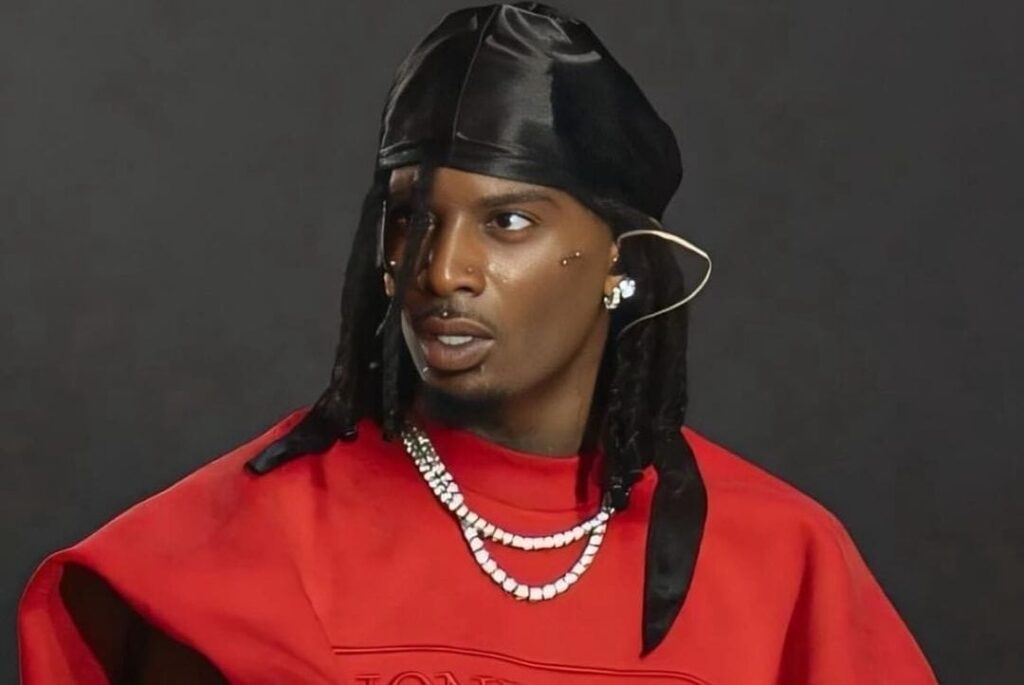

In the landscape of modern rap, some artists make waves, and a few create entire new ecosystems around their sound. Among the most fascinating stories in contemporary music is that of the Atlanta-born rapper whose aesthetic, voice, and stage presence eventually became a cultural phenomenon. His rise wasn’t about fitting into the traditional structure of hip-hop. Instead, it was about rewriting the rules entirely and turning the unexpected into the unforgettable.
His journey is one marked by transformation—creative, personal, and cultural. From underground buzz to global impact, he has become one of the most intriguing figures in music today. His mysterious approach, unpredictability, and artistic fearlessness have earned him not only a devoted fanbase but also a distinct place in modern pop culture.
This article explores the evolution of his artistry, the power of his brand, the movement that grew around him, and the impact he continues to have on music, fashion, and the next generation of performers.
The Rise and Cultural Presence of Playboi Carti
When discussing the last decade of hip-hop, one cannot ignore the energy and aura surrounding Playboi Carti. His arrival didn’t follow the typical arc. Instead of relying on traditional lyrical structures, he introduced a style defined by minimalism, hypnotic repetition, and a voice that functioned almost like an additional instrument. His sound was airy yet intense, carefree yet deliberate, and instantly recognizable.
From his earliest releases, he didn’t try to be the loudest in the room. He became the most distinct. What started as a local buzz in Atlanta’s underground soon evolved into national attention. His breakthrough period was marked not by aggressive promotion but by organic growth—fans sharing songs, clips going viral, and his persona becoming a talking point long before his albums topped charts.
Despite the secrecy surrounding his creative process, what remained consistent was his commitment to innovation. He followed instinct, not expectation. That instinct eventually led him to carve out an identity that resonated with millions: expressive, unpredictable, and electrifying.
A Sound That Redefined a Genre
One of the reasons his influence became so widespread is the way he redefined the use of space and rhythm in rap. His voice glided across beats with an almost melodic spontaneity. His ad-libs became iconic. Even his pauses felt intentional.
Producers who collaborated with him quickly learned that his approach demanded freedom. Instead of filling every moment with words, he often chose minimal phrasing that amplified emotion rather than narrative. The beats were airy, layered, and hypnotic, giving him room to move in unpredictable patterns.
This style opened the door for a wave of young artists who realized that emotion could matter more than complexity. Music could be felt as much as it was understood. He helped shift hip-hop into a space where experimentation wasn’t just accepted—it was celebrated.
A Persona Built on Mystery and Magnetism
His public presence has always been intentionally elusive. Few interviews, little explanation, and a focus solely on the art. Instead of building a brand by oversharing, he cultivated mystique. Fans often found themselves piecing together clues—snippets from performances, rare photos, hints dropped through visuals.
This low-profile approach created an aura around him that many other artists have attempted to replicate. Rather than diluting his identity with constant exposure, he embraced scarcity. This made anticipation a major part of his appeal. When he disappeared, fans speculated. When he resurfaced, it felt like an event.
Yet despite the secrecy, his impact remained loud. His shows became chaotic celebrations—mosh pits, screaming fans, red lighting, and theatrical entrances. Every appearance carried a sense of unpredictability, making him one of the most enigmatic performers of his era.
Reinvention as a Creative Strategy
Few artists have transformed themselves as boldly or as frequently. His artistic journey is separated into distinct eras, each marked by new aesthetics and soundscapes. What makes his reinvention fascinating is how naturally he leans into transformation rather than resisting it.
His early work featured a carefree, youthful vibe—bright, playful, and rhythmically light. Then came a darker, more experimental period that explored punk influences, distorted vocals, and intense energy. Fans began to see not just an artist but a shape-shifter, capable of evolving without losing his essence.
Each shift brought in new listeners while challenging long-time fans to grow with him. He demonstrated that reinvention doesn’t require abandoning one’s identity. Instead, it can be a way to deepen it. His willingness to experiment allowed him to escape the creative boxes many artists get stuck in.
A Fashion Influence That Reaches Beyond Music
Fashion has always been part of his story. Long before major magazines highlighted his style, he was known for pushing boundaries with bold outfits, gender-fluid silhouettes, and a willingness to blend streetwear with high fashion.
His clothing choices often appeared effortless but intentional. Oversized pieces, layered textures, futuristic accessories, and rebellious elements became signatures of his look. Fans didn’t just want to hear his music—they wanted to dress like him.
His influence reached designers, stylists, and even runway culture. He blurred the line between musician and fashion figure, proving that style could be a form of artistic expression just as powerful as sound.
In many ways, he became a symbol of modern individuality—encouraging people to embrace the unconventional and express themselves freely.
The Fanbase That Became a Movement
One of the most remarkable aspects of his career is the culture that formed around him. His supporters are not just listeners—they resemble a community driven by shared energy, inside references, and an understanding of his artistic philosophy.
Fans often describe the experience of listening to his music as visceral. It’s something you feel in your chest before you process with your mind. At concerts, this feeling multiplies. The crowd becomes a collective force, feeding off the rhythm, the lights, and his stage presence.
This kind of devotion doesn’t form overnight. It grows when an artist becomes more than the sound they create—when they become a symbol for creativity without boundaries. His audience sees him as someone who refuses to conform, and that defiance becomes something they carry into their own lives.
A Career Marked by Highs, Lows, and Enduring Curiosity
His journey hasn’t been without obstacles. Delayed releases, long disappearing acts, and sudden musical shifts sometimes frustrated fans. But instead of weakening his presence, these moments added to the mythology around him.
People remained curious. Supporters waited. Critics debated. New listeners arrived.
What kept his momentum alive was the authenticity behind his silence. He didn’t disappear for theatrics—he stepped back to create, to grow, and to prepare for what came next. In a world defined by constant output, his approach felt almost revolutionary.
Influence on New-Generation Artists
Many rising artists cite him as inspiration—not just for his sound but for his overall approach to art. His willingness to treat vocals as rhythm, to blend genres, and to break conventions opened pathways for newcomers to explore unconventional styles.
He made it acceptable for rap to embrace abstraction. He showed that identity could be fluid. He proved that evolution didn’t require explanation.
Today, elements of his approach appear everywhere—echoes of his sound in production choices, traces of his aesthetic in fashion trends, and his emotional style embedded in younger artists’ performances.
Instead of creating replicas, his influence created a generation of experimenters.
The Global Reach of His Artistry
Although his career started within the Southern rap scene, his impact eventually spread across continents. Concerts in Europe, global fan communities, and international festivals expanded his presence beyond American borders.
Part of this reach stems from the universal nature of his music. The emotion isn’t limited by language. The energy translates across cultures. His performances don’t rely on lyrical density—they rely on atmosphere.
This global impact demonstrates that modern music thrives on feeling rather than formula. His art resonates with listeners who seek intensity, individuality, and the excitement of unpredictability.
A Legacy Still in Motion
Even though he is still relatively early in his career, discussions about his legacy are already widespread. His name surfaces in conversations about genre evolution, futuristic production, and artistic freedom.
But what makes his legacy compelling is that it is unfinished. Every new era brings the possibility of transformation. Every silence hints at reinvention. Every release feels like a moment the music world pauses for.
His story is not a linear rise—it is a mosaic of risks, moments, and standout cultural shifts. And that is what makes his future so intriguing.
Conclusion
Playboi Carti has become much more than a musician. He represents the courage to create without fear, to evolve without explanation, and to exist outside the boundaries society often imposes on artists. His influence stretches across music, fashion, culture, and the emotional landscape of a generation that values authenticity over perfection.
He is unpredictable but intentional, elusive but impactful, mysterious yet deeply expressive. His voice has shaped sounds. His style has shaped trends. His presence has shaped a movement.
In a world where artists often chase attention, he reminds us that power can come from doing the opposite—letting the work speak, letting the energy build, and letting reinvention guide the journey.
His story is far from over, and that is precisely why it continues to captivate. The future remains uncertain, but one thing is clear: his influence will echo for years to come, inspiring new creators to embrace boldness, individuality, and the limitless potential of art.