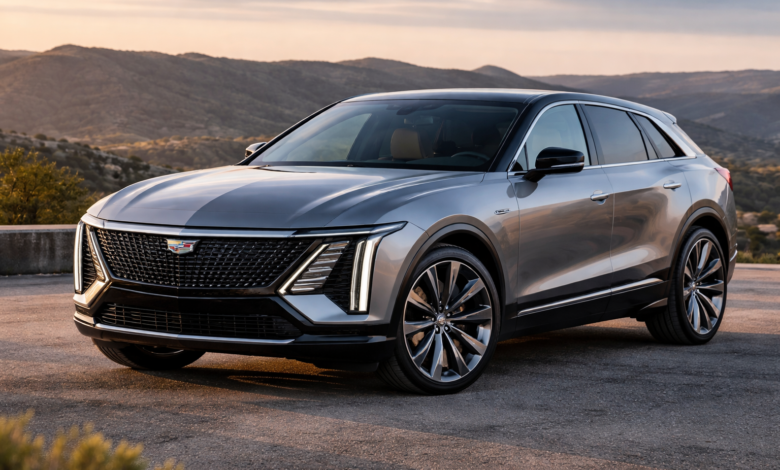

How Do the Driving Modes in Cadillac Lyriq Offer Different Ranges or Battery Usages?
When evaluating an electric vehicle like the Cadillac Lyriq, one of the common questions drivers ask is whether the selectable driving modes affect the real-world driving range or how the battery is used on a daily basis. Cadillac equips the Lyriq with multiple driving modes that tailor power delivery, throttle response, regenerative braking, and overall vehicle behavior to match various road conditions and driver preferences. Although the physical battery capacity remains the same no matter which mode you select, the way that energy is used does change with each mode, and this leads to noticeable differences in how far the Lyriq can travel on a full charge in real-world situations.
Understanding how these modes influence efficiency can help drivers make more informed choices about when to use each setting. Whether you’re preparing for a long highway trip, navigating icy roads in winter, or simply enjoying a spirited drive, the driving mode plays a subtle but meaningful role in efficiency and range outcomes.
Real-World Range vs EPA Estimates
The EPA range for the Cadillac Lyriq — which can be up to around 314 miles on a single charge in ideal conditions — is a standardized measure based on controlled testing. However, in real life, your actual driving range can differ based on driving behavior, environmental conditions, and especially the mode you choose. Driving modes do not alter the battery’s size or its total stored energy, but they do influence how efficiently that energy is drawn from the pack.
For example, a setting that prioritizes smooth, gentle acceleration and enhanced regenerative braking tends to yield more miles per charge than one that maximizes performance output or places higher demands on the motors. In essence, exploring the differences requires a look at each mode’s target focus and how those targets shift priorities between efficiency and power.
How Driving Modes Influence Energy Use
Tour Mode — Balanced Efficiency
Tour Mode is the most commonly used default setting in the Lyriq. It is designed to deliver a smooth blend of power, comfort, and efficiency that aligns well with everyday driving needs. When in Tour Mode, the Lyriq responds to throttle input gradually and applies regenerative braking at moderate levels. This balanced approach encourages steady battery usage and generally results in real-world range figures that most closely align with the EPA estimates provided by Cadillac.
In this mode, the vehicle’s systems work together to avoid unnecessary energy spikes. Smooth power delivery translates to lower watt-hours per mile, and stronger regenerative braking recaptures energy when slowing down. These elements combined help stretch the battery’s usable energy over a longer distance.
Sport Mode — Performance Focus
Sport Mode, by contrast, pushes the Lyriq toward a more dynamic driving experience. Power delivery becomes more aggressive, throttle response sharpens, and the vehicle feels more responsive. While this can be fun on twisty roads and in performance-oriented scenarios, it comes at a cost to efficiency. Since the powertrain draws more current to deliver heightened performance, energy consumption per mile increases.
In real-world tests and owner reports, Sport Mode can reduce the effective range by roughly 8 % to 15 % when driven with enthusiasm, compared to more conservative modes. The sharper acceleration and higher peak power draw mean the battery drains more quickly than in Tour Mode, meaning you might see variations of 20 to 40 miles fewer on a single charge under spirited driving.
Snow/Ice Mode — Stability and Safety
Snow/Ice Mode is engineered for slippery surfaces rather than maximum efficiency. In conditions where traction is limited, the system calibrates throttle response to be softer and reduces wheel spin, while traction control systems become more active. Regenerative braking may also be adjusted to prevent instability in low-traction environments.
This mode typically consumes slightly more energy than Tour Mode, especially if climate control systems are working harder in cold weather. In realistic winter conditions, the impact of low temperatures on lithium-ion batteries can be more significant than the mode itself, but Snow/Ice Mode further encourages a conservative energy use pattern that prioritizes safety over range.
My Mode — Personalized Balance
Cadillac’s customizable “My Mode” allows drivers to configure aspects like throttle sensitivity, steering feel, and regenerative braking strength. By tailoring settings, you can essentially optimize the vehicle for efficiency or performance based on your preferences. When My Mode is set for softer throttle response and stronger regen braking, it can produce efficiency results similar to or even better than Tour Mode in certain city driving conditions.
This flexibility means My Mode can adapt to your personal style. Drivers who favor smooth acceleration and use regenerative braking effectively may squeeze out additional range compared to standard configurations.
Why Driving Modes Affect Battery Usage
Software Profiles Drive Efficiency
At the core of how driving modes work is a suite of software profiles that manage multiple vehicle systems. These systems include throttle response, motor power delivery, regenerative braking behavior, traction and stability control, and even how aggressively the climate control system operates. Each of these touches upon energy use in subtle ways.
For instance, aggressive throttle curves require more instantaneous electrical power, while heavy use of climate control diverts energy for cabin comfort rather than forward motion. Similarly, stronger regenerative braking recaptures more energy when slowing down, reducing the net energy expended per mile.
When you shift between modes, the Lyriq recalibrates these systems. Sport Mode may soften regen and increase power demand, while Tour Mode might emphasize recovery and gentle acceleration. These differences are why the modes can lead to measurable variations in real-world range and battery usage.
Weather and Terrain Also Matter
Although driving modes influence range and battery usage, they are not the only determining factors. External conditions like temperature, terrain, and wind resistance also play significant roles in how far an EV can travel on a charge. Cold weather can reduce battery efficiency, while hilly terrain increases energy requirements. Combining these elements with a performance-focused mode will amplify energy consumption, while a more conservative mode can help offset some environmental demands.
For example, Snow/Ice Mode provides traction control that helps in slippery settings, but the cold ambient conditions themselves can reduce total range significantly. So while the question of whether driving modes affect range and battery usage is answered in the affirmative, it’s clear that real-world range depends on a blend of factors beyond just mode selection.
Practical Tips for Maximizing Range
Understanding Efficiency Beyond Modes
While choosing the most efficient driving mode is helpful, how you drive and prepare your vehicle also matters. For daily commuting or long trips, maintaining steady speeds, avoiding rapid acceleration, and using features like “One-Pedal Driving” can help extend range by maximizing regenerative braking.
Climate and Battery Preconditioning
Climate control and battery temperature play important roles in real-world range. Preconditioning the cabin and battery before a trip — especially in cold weather — can make a noticeable difference. In addition, moderating cabin heating and cooling demands can help conserve energy that would otherwise be expended on climate control.
Proper Tire Maintenance
Vehicle dynamics such as rolling resistance also affect energy use. Keeping the tires properly inflated and selecting tires optimized for efficiency rather than performance can yield small but meaningful gains in range.
Conclusion
Ultimately, the question do the driving modes in Cadillac Lyriq offer different ranges or battery usages? is answered with a clear yes. While the Lyriq’s Ultium battery capacity remains constant across all modes, the way each mode configures throttle response, regenerative braking, and related vehicle systems significantly influences how efficiently that stored energy is used.
Tour Mode tends to offer the best balance of comfort and efficiency, delivering range closest to EPA estimates. Sport Mode prioritizes performance at the expense of efficiency, while Snow/Ice and My Mode fine-tune behavior for specific conditions or personalized preferences. Climate control, terrain, and driving behavior also interact with mode selection, meaning your actual range will vary based on a blend of factors.
Understanding these dynamics helps drivers make the most of their Lyriq’s capabilities, whether maximizing miles between charges or enjoying a tailored driving experience for specific conditions. When it comes to energy usage and range, Cadillac’s selectable driving modes give drivers meaningful tools to balance performance and efficiency in real-world scenarios.